Kurt Lewin Model of Change
Kurt Lewin's model of change is a simple framework for understanding how to implement change in an organization. It consists of three main stages:
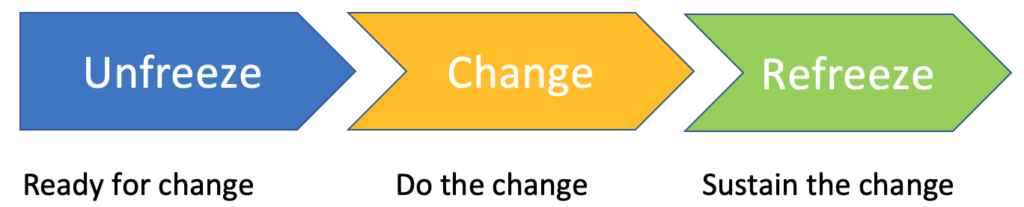
Unfreezing: This first step involves preparing the organization for change. It means helping people understand why the change is necessary and getting them to let go of old habits or ways of working. It's like thawing ice to make way for something new.
Changing: In this stage, the actual change happens. This is when new processes, behaviours, or practices are introduced. During this time, people learn new skills and adapt to the new way of doing things. It's like changing a recipe to improve a dish.
Refreezing: Once the change has been made, the final step is to solidify it. This means making the new changes a permanent part of the organization. It's important to reinforce the new behaviours and ensure everyone is comfortable with the changes, much like freezing the new recipe so it becomes the standard.
Kurt Lewin’s three-step change model explains organizational change as a process of unfreezing, changing, and refreezing new behaviours into a stable pattern. It is widely used because it is simple, logical, and fits many real-life organizational situations.