Leadership situational model (LSM)
The Situational Leadership Model is a way to understand how effective leaders adjust their style based on the situation and the needs of their team. Developed by Paul Hersey and Ken Blanchard, this model emphasizes that there is no single best way to lead. Instead, a leader should adapt their approach depending on the readiness or maturity level of the team members.
- Different Leadership Styles: The model outlines four main leadership styles that leaders can use, depending on the situation:
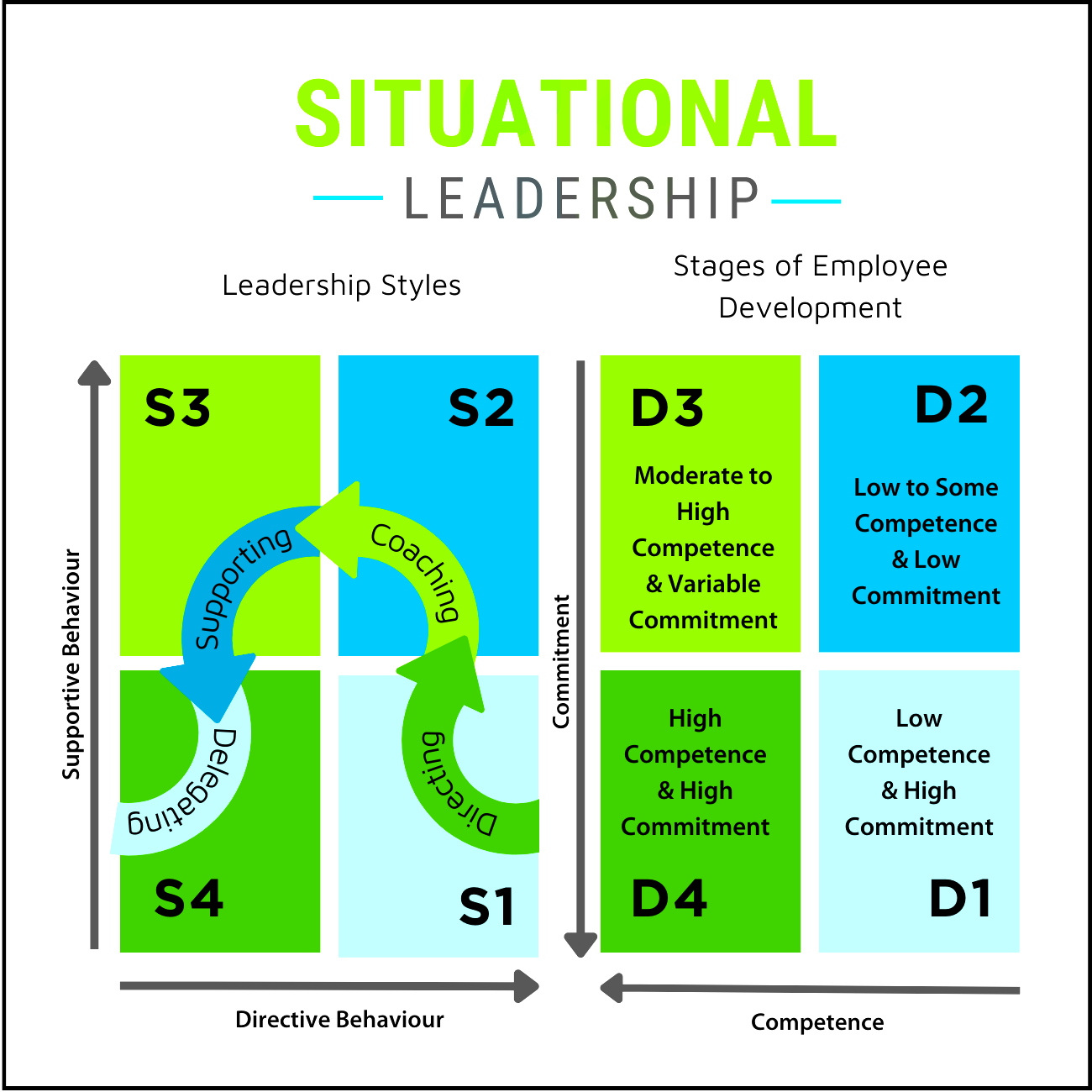
Telling (Directing):
The leader gives clear instructions and closely supervises the team. This style is best suited for team members who are new or lack experience and need guidance.
Selling (Coaching):
The leader provides direction while also encouraging input from team members. This style works well for individuals who have some skills but still need support and motivation.
Participating (Supporting):
The leader shares decision-making with the team and encourages collaboration. This style is effective for team members who are competent but may lack confidence or motivation.
Delegating:
The leader gives team members full responsibility for tasks and decisions. This style is suitable for experienced and confident team members who can work independently.
Team Readiness
The model emphasizes assessing the readiness or maturity of team members, which is based on:
- Ability: How skilled or knowledgeable a team member is in performing a task.
- Willingness: How motivated and confident they feel about completing the task.
Adapting Leadership
Leaders should evaluate the situation and the readiness level of their team members and then choose the most appropriate leadership style. For example, if a team member is new and unsure, the leader should use a telling style. If the team member has some skills and is eager to learn, a selling style may be more effective.
The Situational Leadership Model highlights that flexibility is key. By adapting leadership styles to fit team needs, leaders can improve motivation, performance, and overall team effectiveness. It encourages leaders to assess the specific context and adjust their approach accordingly, leading to better outcomes for both the team and the organization.
The model teaches that effective leaders are those who can change their style based on their team’s needs and the situation they face. This adaptability leads to more successful leadership and improved team performance.
Situational Leadership case studies typically demonstrate how a leader shifts among directing, coaching, supporting, and delegating styles depending on followers’ competence and commitment. Below are two short, exam-friendly case studies with questions.