Tuckman Model of Team Development
The Tuckman Model of team development explains how teams grow and change over time. It includes five stages, each with its own characteristics.
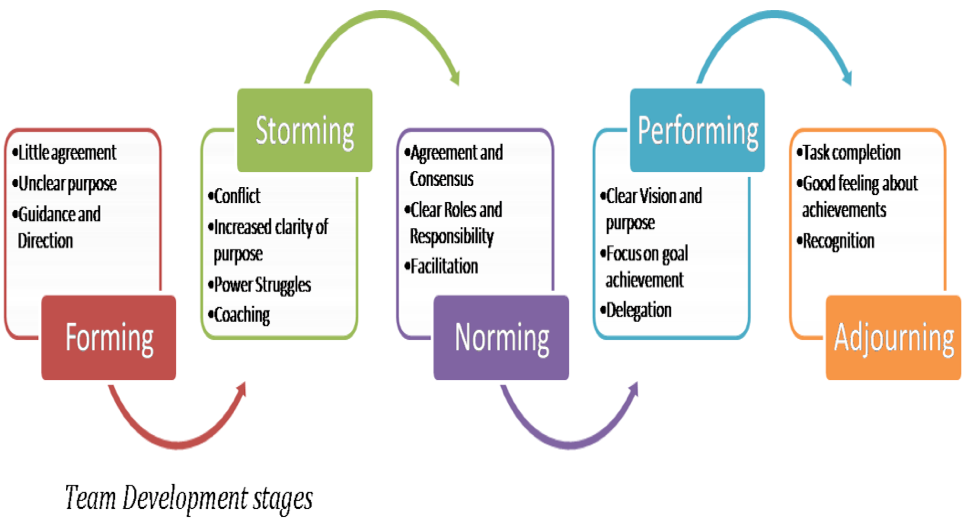
Forming:
This is the first stage when team members meet and get to know each other. Everyone is polite, and people are figuring out their roles. It’s like the ice-breaking phase where the team starts to form.
Storming:
In this stage, conflicts and disagreements may arise as team members start to express their opinions and push against each other’s ideas. It can feel a bit chaotic, but it is a normal part of the process as everyone tries to find their place.
Norming:
Here, the team starts to settle down. Members begin to resolve their differences and establish norms or guidelines for working together. They develop trust and learn how to collaborate effectively.
Performing:
At this stage, the team is functioning at its best. Members work well together, are focused on their goals, and support each other. They have built strong relationships and can tackle challenges efficiently.
Adjourning:
This is the final stage when the team completes its project or task. Members reflect on their work, celebrate their achievements, and may go their separate ways. This stage is important for acknowledging the team’s efforts.
Example –
A useful case study for the Tuckman Model can be built around a student project team working on a semester-long assignment, showing all five stages in sequence.