Organizational Behavior (OB)
Organizational Behavior (OB) is the study of how individuals, groups, and organizational structures interact within the workplace to influence performance, productivity, and satisfaction.
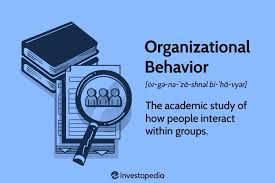
OB examines human behaviour at three levels: individual (personality, motivation, perception), group (team dynamics, leadership, communication), and organisational (culture, structure, external environment). It draws from psychology, sociology, and management to predict, understand, and manage these interactions for better outcomes, such as improved decision-making and conflict resolution. The goal is to align employee needs with organisational objectives while fostering a positive culture.
Key Example: Motivation in Practice
A manager applies OB motivation concepts using rewards, such as offering bonuses or recognition to an underperforming sales team. This boosts morale and sales by 20% as employees feel valued and driven toward goals. In contrast, poor communication leads to rumours and absenteeism, reducing efficiency until the issue is addressed through open forums. Google’s creative culture, with perks such as flexible hours, exemplifies how OB enhances innovation and retention by prioritising employee well-being.
Definition and Scope
Organisational Behaviour (OB) examines individual and group dynamics, including attitudes, emotions, motivation, and interpersonal interactions within organisations. It also studies the impact of organisational structures and culture on behaviour. The field is multidisciplinary, drawing insights from psychology, sociology, anthropology, and management to improve workplace harmony and productivity.
Fundamental Concepts
Key concepts of OB include:
- The nature of people: Understanding human needs, emotions, and behaviour patterns.
- The nature of organisations: Groups of people working towards common goals using managerial and interpersonal skills.
- Levels of analysis: Individual behaviour, group behaviour, and organisational structure.
- The dual goal of OB: Meeting employees’ needs while achieving organisational objectives.
OB helps managers and leaders improve communication, decision-making, motivation, innovation, and conflict resolution in a diverse workforce, making it crucial for organisational success.
These insights collectively define OB as the systematic study of human behaviour in organisations to foster productive and effective work environments.