Scope Of Organisational Behaviour
The scope of organisational behaviour integrates insights from psychology, sociology, anthropology, and management to understand and manage workplace dynamics effectively. Here are the primary areas covered within the scope of OB:
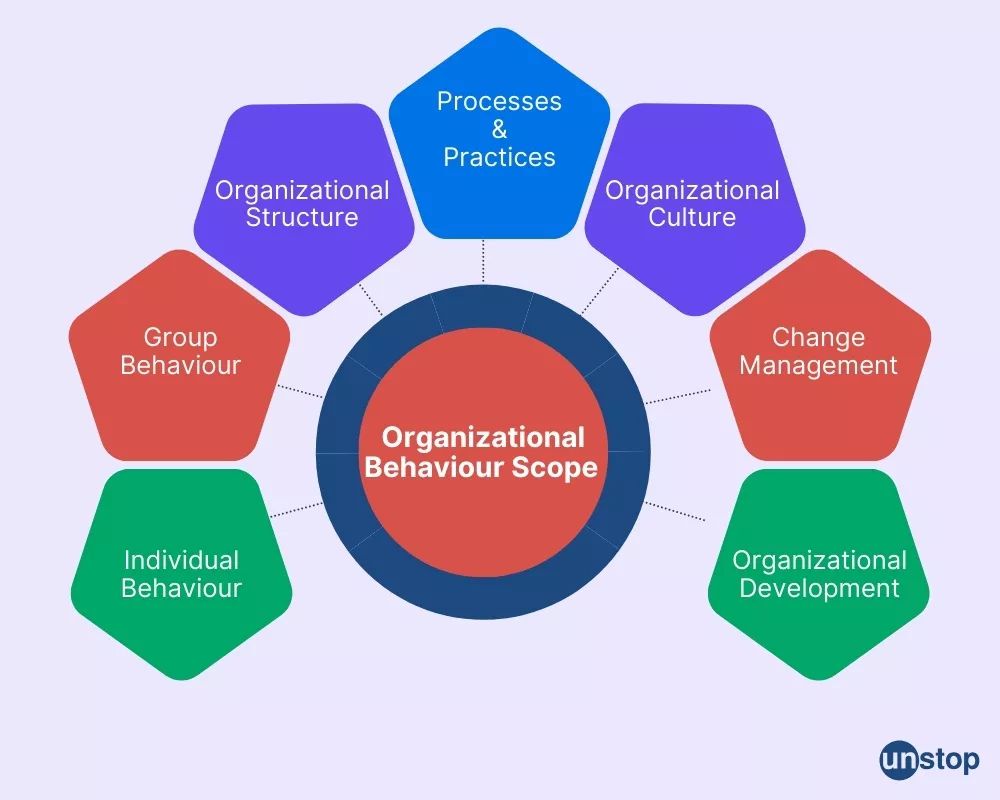
Individual Behaviour
The study of individual traits and how they influence behaviour at work helps in understanding personality, job performance, employee behaviour, employee engagement, and job satisfaction.
It also aids individuals in interpreting and making sense of their environment, including understanding biases, how perceptions influence decision-making and interpersonal interactions, and how new knowledge and skills are acquired.
Group Behaviour
Norms are shared expectations about appropriate behaviour within a group and influence how members interact and perform tasks. Roles are expected behaviour patterns for individuals within a group and help structure group activities and responsibilities. Team building is the process of improving collective performance and enhancing communication, collaboration, and overall group effectiveness.
Managing and resolving disputes is crucial for a healthy work environment and requires an understanding of conflict dynamics. Additionally, guiding individuals or groups toward achieving goals involves exploring various leadership styles and their impacts on organisational outcomes.
Organizational Structure
The arrangement of individuals within an organisation, based on rank and authority, helps define the chain of command and reporting relationships. Clear job roles, with specific duties and responsibilities assigned to individuals, are essential for efficient task execution and accountability.
Processes & Practices
Effective communication, which is crucial for coordination and collaboration, involves the exchange of information and understanding between individuals or groups. Understanding decision-making processes is essential for enhancing the quality and effectiveness of decisions, as these processes guide how choices are made to solve problems.
Organizational Culture
Organisational culture shapes behaviour and influences how employees perceive their roles by fostering shared understandings and beliefs among members. Values and core principles guide behaviour and decision-making and influence organisational practices and employee conduct.
Change Management
Change management involves approaches for implementing organisational change, including planning, communicating, and executing change initiatives. Effective change management strategies focus on managing the transition from the current state to a desired future state, aiming to minimise resistance and ensure smooth transitions.
Organizational Development
Enhancing organisational effectiveness and improving employee well-being involves implementing various strategies and interventions for organisational growth. Encouraging a balance between work and personal life helps employees achieve a healthy equilibrium, leading to increased job satisfaction and reduced stress levels.
Promoting diversity and inclusiveness in the workplace encourages creativity and innovation. Programs that support employees’ physical, mental, and emotional well-being can result in higher levels of job satisfaction and efficiency.